
Receiving a notice of non-compliance after a fire marshal walkthrough is enough to ruin any property manager’s week. In the Chicagoland area, fire codes are rigorous for a reason, but that does not make the paperwork or the potential fines any less stressful. Whether the inspector found a painted head, a blocked valve, or an expired tag, the clock is now ticking to resolve the issue.
At Central States Automatic Sprinklers, we understand that a failed inspection is not just a technical problem: it is a liability and a massive distraction from your daily operations. You need a partner who can move as fast as the city requires. This guide outlines exactly how to handle the next 48 hours to protect your building, your tenants, and your professional reputation.
Hours 1 to 4: Assess the Damage and Document Everything
The moment the inspector hands you that report, your first job is to understand the specific “why” behind the failure. Fire marshals in Chicago and Northwest Indiana often use technical shorthand or code citations that can be confusing if you are not in the industry every day. Do not let the report sit on your desk until the end of the day. Delaying your response only shortens your window for corrections.
Take a walkthrough of the specific areas mentioned in the report. If the violation is for physical obstructions, corroded pipes, or painted sprinkler heads, take your own photos for documentation. Having a clear visual record helps our team provide a more accurate estimate and ensures we bring the right parts for the repair on the first visit. This prevents “second trips” that can delay your final clearance.
Once you have a handle on the list, reach out to a professional. You need a team that understands the specific nuances of local fire codes in both Illinois and Indiana. When you need a sprinkler system inspection Chicago and northwest Indiana, choose a provider that offers comprehensive reporting to satisfy city requirements. Our reports are designed to be sent directly to your local fire department or insurance company to prove your commitment to safety.
Hours 5 to 24: Secure a Responsive Service Partner
Not all fire protection companies are built for speed. Some may take days just to return your call, which is not an option when you have a 10-day or 30-day window to comply. You need an “auto-pilot” service that takes the burden of coordination off your plate entirely. This is where the distinction between a vendor and a true partner becomes clear.
A high-quality service partner will review your violation report and prioritize the most critical life safety issues first. This is where experience counts, especially in older Chicago buildings with unique plumbing layouts. A team that knows the local landscape will understand exactly what the local inspectors are looking for in a follow-up. They can help you determine if the fix is a simple component replacement or if you require more extensive sprinkler system service Chicago and northwest Indiana to bring the system back to code.
During this window, your service partner should provide a clear timeline for the repairs. This timeline is your shield against further legal action. If a fire marshal follows up before the work is done, being able to show a signed contract and a scheduled repair date demonstrates a good faith effort. This proactive stance can often prevent further fines or the dreaded notice to vacate in extreme cases.
Hours 24 to 48: Execution and Re-Certification
By the second day, your repair team should be on-site and working. At CSAS, we focus on minimizing disruption to your tenants or employees while we work. Whether it is a commercial warehouse, a high-traffic retail space, or a residential high-rise, the goal is to get the system into a ready state as quickly as possible. We treat every repair with the urgency of a life-safety emergency.
Once the repairs are complete, the most important step is the documentation. A repair without a professional report is just a half-measure in the eyes of the law. You need a detailed service record that explicitly addresses each deficiency noted in the original inspection. This document must be kept on-site and made available for the fire marshal’s return visit.
Finally, ensure your system is properly tagged with the correct color-coded tag for the year. In Chicago and Northwest Indiana, the physical tag on your riser is the first thing an inspector looks for during a return visit. It is the universal sign that your building is safe and that you have fulfilled your duty as a property manager. Having that tag prominently displayed provides instant reassurance to both inspectors and occupants.
Understanding Common Violation Triggers
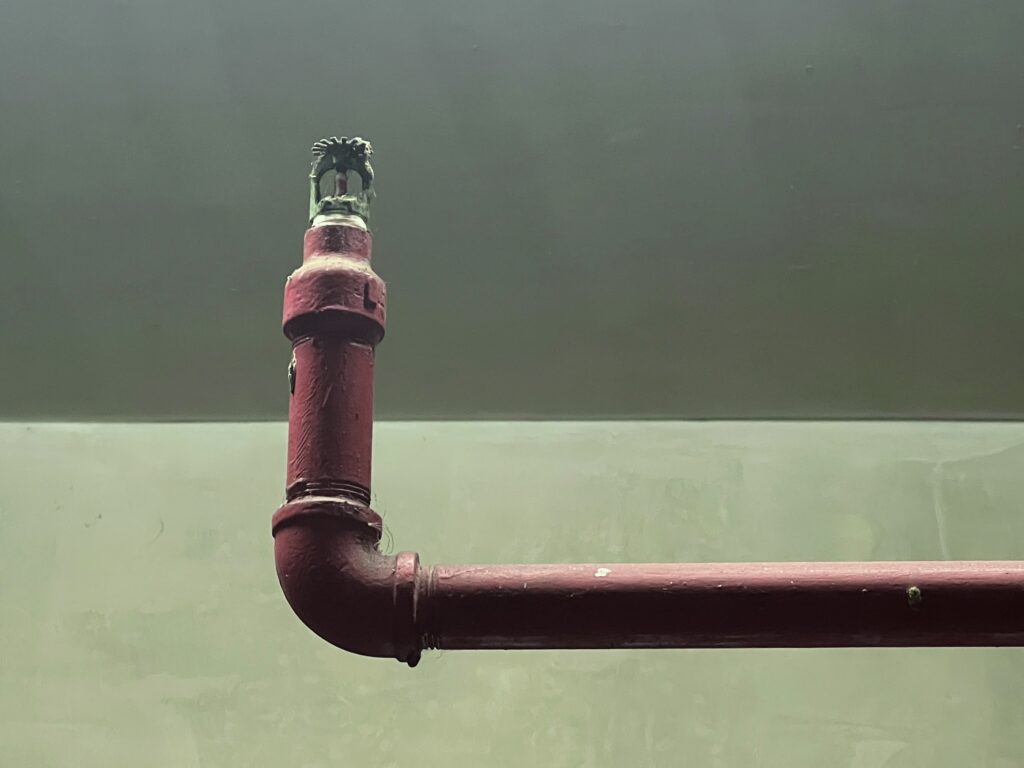
Many property managers are surprised by what triggers a failure. Often, it is not a massive pipe burst, but small maintenance oversights. For example, painted sprinkler heads are a frequent citation in Chicago apartment buildings where painters are not careful. A single layer of paint can delay the activation of a head during a fire, rendering it useless.
Another common issue is the “five-year internal” inspection. Many owners forget that every five years, the city requires an internal look at the piping to check for obstructions or corrosion. If you cannot produce the paperwork for this specific test, you will likely receive a violation notice regardless of how clean the outside of your pipes look.
The Role of NICET-Certified Technicians
When choosing who will handle your 48-hour recovery, ask about their certifications. NICET (National Institute for Certification in Engineering Technologies) is the gold standard in our industry. Having a NICET-certified technician on-site means that the person fixing your system understands the engineering behind the code. This level of expertise ensures the fix is permanent and compliant with the highest industry standards.
Don’t let a violation notice turn into a fine. Call Central States Automatic Sprinklers, Inc. today at (708) 489-9400 or visit our contact page to get your system back in compliance.
Key Takeaways
- Act immediately: Do not wait for the grace period to dwindle before calling a professional.
- Document visually: Take photos of the specific violations to speed up the quoting and repair process.
- Prioritize local expertise: Use a team familiar with specific Chicago and NW Indiana municipal codes.
- Secure the paperwork: Ensure you receive a formal report that mirrors the inspector’s list of deficiencies.
- Think long-term: Use this recovery period to set up a recurring inspection schedule to avoid future surprises.