
As the summer heat settles over the Chicagoland area and Northwest Indiana, property managers and facility directors shift their focus to seasonal maintenance. Air conditioning units are serviced, landscaping is refreshed, and cooling towers are optimized. However, there is a critical, hidden vulnerability inside your building that requires immediate attention during the summer months: your fire sprinkler system.
The extreme humidity and dramatic temperature fluctuations of a Midwestern summer create a perfect storm for internal pipe degradation. Without proactive oversight, these environmental factors can accelerate rust, pinhole leaks, and catastrophic system failures.
Scheduling a professional sprinkler system inspection in Chicago and northwest Indiana during the early summer is the most effective way to safeguard your property. Understanding the specific risks that warm weather brings allows you to protect your life safety infrastructure before minor issues transform into costly emergencies.
The Hidden Threat of Summer Humidity and System Corrosion
Many building owners assume that fire sprinkler pipes are completely sealed, inert environments. In reality, the internal conditions of these pipes change constantly, especially when outdoor humidity levels spike. This seasonal shift presents distinct challenges for both wet pipe and dry pipe systems.
How Summer Impacts Dry Pipe Systems
Dry pipe sprinkler systems are filled with pressurized air or nitrogen rather than water, making them ideal for areas prone to freezing. However, during hot and humid summer months, the ambient moisture in the air can cause severe issues inside these pipes.
When a standard air compressor draws in hot, humid summer air to maintain system pressure, that moisture condenses inside the cooler environment of the piping network. This accumulation of trapped water, combined with the oxygen inside the pipe, creates a highly corrosive environment. This process triggers rapid oxidation, leading to internal scaling, rust, and eventually, structural failure of the pipe walls. To identify these hidden reservoirs before they cause permanent damage, building managers must schedule a sprinkler system inspection of Chicago and northwest Indiana immediately.
The Danger of Microbiologically Influenced Corrosion (MIC)
Warm summer temperatures also accelerate the growth of microscopic organisms inside wet pipe systems. This phenomenon is known as Microbiologically Influenced Corrosion, or MIC.
MIC occurs when specific bacterial species thrive in the stagnant water inside your sprinkler lines. These microbes form a biological film along the interior of the pipes, secreting concentrated acids that eat through steel. The warmer the water inside your building becomes during the summer, the faster these bacterial colonies multiply, drastically shortening the lifespan of your system.
The Costly Consequences of Neglecting Seasonal Inspections
Ignoring the internal health of your fire sprinkler system during the high-risk summer season can lead to severe operational and financial consequences. Corrosion is a progressive problem: it never fixes itself, and it only becomes more expensive to remedy over time.
Pinhole Leaks and Sudden Water Damage
As corrosion eats through the walls of your steel piping, it creates microscopic weak points known as pinhole leaks. These leaks often develop in hidden areas, such as above drop ceilings or inside mechanical shafts.
A single pinhole leak can drip undetected for weeks, ruining drywall, destroying expensive electrical equipment, and promoting mold growth. In worst-case scenarios, a severely corroded pipe can rupture completely under normal system pressure, causing thousands of dollars in sudden water damage and forcing an unexpected shutdown of your facility operations.
Blocked Sprinkler Heads and System Failures
When internal corrosion occurs, rust flakes and mineral scale break away from the pipe walls and accumulate at the lowest points of the system. This debris frequently settles directly above the sprinkler heads or inside the small branch lines.
If a fire breaks out, this loose sediment can instantly rush forward and clog the sprinkler nozzle, preventing water from discharging properly. A system rendered ineffective by internal corrosion fails to control the fire, exposing your tenants, your property, and your business to devastating liability. To prevent catastrophic blockages, regular maintenance through a professional sprinkler system service in Chicago and northwest Indiana is essential.
What to Expect During a Professional Summer Inspection
A certified, comprehensive fire sprinkler inspection involves a series of rigorous, highly technical checks designed to detect hidden vulnerabilities before they cause a failure. It goes far beyond a simple visual walk-through.
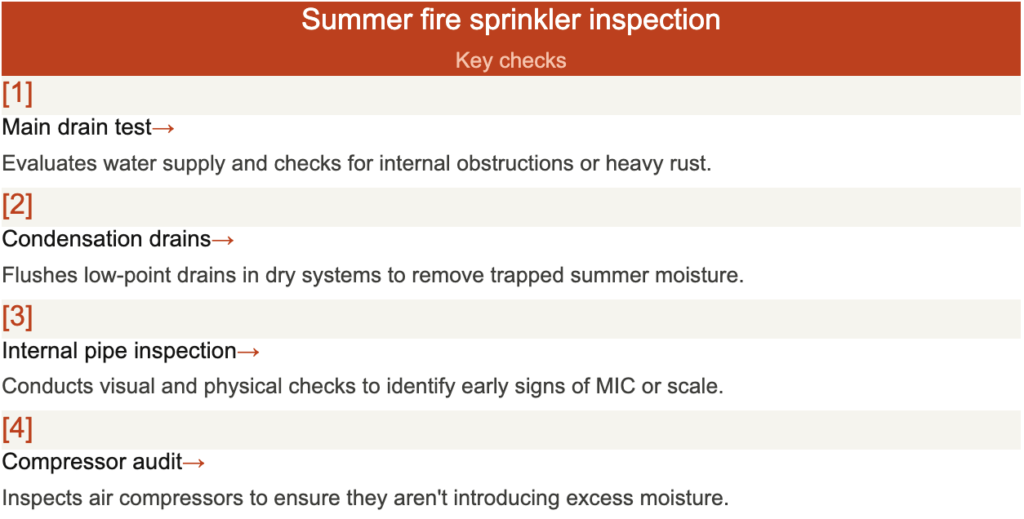
When you invest in a professional sprinkler system service in Chicago and northwest Indiana, an expert technician will perform a multi-point evaluation tailored to seasonal risks. This service includes analyzing your system’s pressure levels, evaluating internal pipe conditions, and ensuring all mechanical components operate flawlessly.
Summer fire sprinkler inspection key checks
Proactive Care Equals Total Property Manager Relief
For property managers and facility directors, managing compliance and building safety can feel like a full-time juggling act. A missed inspection or an unexpected pipe repair can instantly derail your weekly schedule and blow your maintenance budget.
Partnering with an experienced, local fire safety team allows you to put your compliance obligations on autopilot. By scheduling a proactive sprinkler system inspection in Chicago and northwest Indiana early in the summer, you eliminate the stress of surprise breakdowns, keep your building fully compliant with local fire codes, and demonstrate a clear commitment to risk management.
Do not wait for a sudden leak or a failed city audit to think about your fire safety infrastructure. Protect your building, your tenants, and your business from summer corrosion risks right now.
Contact Central States Automatic Sprinklers, Inc. today by visiting our Contact Page to schedule your professional system inspection.
Key Takeaways
- Humidity Drives Corrosion: High summer humidity and warmth accelerate rust and bacterial growth (MIC) inside sprinkler pipes.
- Dry Systems Are at Risk: Humid air introduced by compressors can condense inside dry systems, causing rapid internal damage.
- Prevent Costly Water Damage: Early summer inspections catch pinhole leaks before they rupture and cause massive asset destruction.
- Ensure Life Safety Reliability: Clearing out internal rust scale ensures that water flows freely and sprinkler heads activate perfectly during a fire emergency.
- Simplify Your Operations: Proactive seasonal testing provides total peace of mind, shifting your building compliance to a stress-free, predictable schedule.