Author: Sean P. Clancy, Vice President (22 years of experience) and John A. Andrews, President (55 years of experience), fire protection specialists keeping Chicagoland and Northwest Indiana properties safe and code-compliant.
The annual sprinkler inspection is on the calendar for Tuesday morning. Your building engineer wants to know whether the alarm will sound in the tenant suites. The school principal is asking if classes will be interrupted. And your insurance carrier has already emailed asking for a copy of last year’s report.
For building owners, facility directors, and school administrators across Chicago, fire safety comes with real oversight. The Chicago Department of Buildings and the Chicago Fire Department’s Bureau of Fire Prevention both hold properties to strict standards, and an annual fire sprinkler service is one of the main ways you show your building meets them.
An annual fire sprinkler service in Chicago is a series of tests set by NFPA 25 that checks your water supply, control valves, alarms, piping, and sprinkler heads, plus any dry systems and fire pumps, followed by a written report of what passed and what needs repair. Knowing what happens during that visit helps you prepare your building, avoid surprises, and keep every life safety system ready to work when it counts.
Core Tests in an Annual NFPA 25 Sprinkler Service
Main Drain Test
The main drain test checks whether enough water is reaching your sprinkler system. A licensed sprinkler fitter attaches gauges at the system riser, opens the main drain valve, and records the static pressure (with no water flowing) and residual pressure (with water flowing).
Comparing those readings with past results shows whether anything has changed. A large pressure drop or a slow recovery can point to a partly closed valve, a restriction in the water supply, or buildup inside the pipes that could starve your sprinkler heads during a fire.
Waterflow Alarm and Tamper Switch Checks
Your sprinkler system is wired to the building’s fire alarm panel through monitoring devices. To test the waterflow alarm, the technician opens the inspector’s test valve, which simulates a single sprinkler head opening, and confirms the alarm signal reaches the panel.
Technicians also test the tamper switch on each control valve. If a valve is turned away from fully open, the switch should send a supervisory signal to the panel within two turns of the handwheel. This matters because NFPA research has consistently found that a system shut off before a fire is the most common reason sprinklers fail to operate.
Piping, Hanger, and Sprinkler Head Inspection
The technician walks the building to check exposed piping, hangers, fittings, and sprinkler heads for damage, corrosion, leaks, and loading, which is dust or grease buildup on the heads. They also check clearance below the sprinkler deflectors, which NFPA 25 generally requires to be at least 18 inches. Storage stacked too close to a head blocks the spray pattern and will be written up as a deficiency.
Additional Testing for Dry Systems and Fire Pumps
Dry Pipe Valves
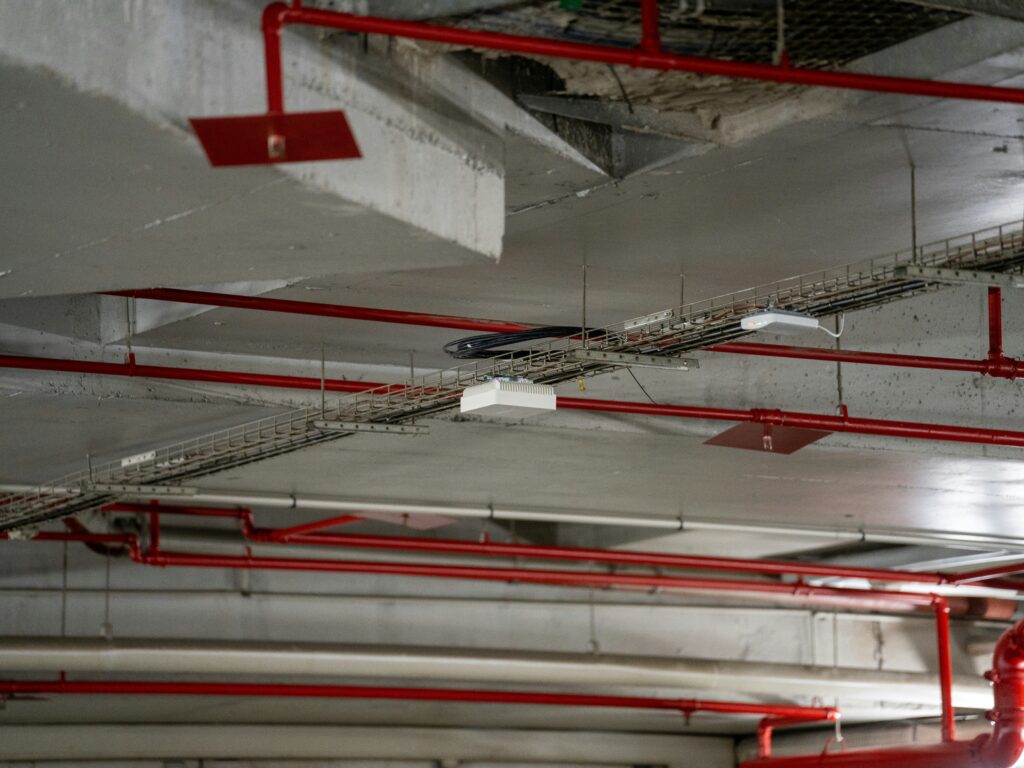
Spaces that can freeze, such as unheated parking structures in the Loop or loading docks in Fulton Market, often use dry pipe systems. These systems hold pressurized air or nitrogen in the pipes to keep water back until a sprinkler head opens.
Each year, technicians perform a trip test on the dry pipe valve. Every three years, that becomes a full-flow trip test that times how long water takes to reach the inspector’s test connection. Technicians also check low-air alarms, quick-opening devices, and air compressors so the system does not trip by accident during a cold snap.
Fire Pumps
High-rise offices, hospital campuses, and large warehouses often rely on electric or diesel fire pumps to boost water pressure. The annual fire pump test runs the pump at no flow (churn), at 100 percent of its rated capacity, and at 150 percent of rated capacity.
Technicians record suction and discharge pressure, pump speed, voltage, and amperage, then compare the results with the pump’s original performance curve. If output has dropped, the pump needs service before it is relied on in an emergency.
What Happens After the Inspection
How Deficiencies Are Classified
Once testing is done, your contractor prepares an NFPA 25 inspection report. Findings are sorted so you can prioritize repairs:
- Impairments: all or part of the system is out of service. The area is tagged, fire watch is set up as required by the AHJ, and repairs are scheduled right away.
- Critical deficiencies: conditions that could affect how the system performs in a fire, such as painted sprinkler heads, badly corroded pipe, or a malfunctioning alarm switch.
- Noncritical deficiencies: minor issues that do not affect system performance, such as missing signs, light rust on hangers, or a short supply of spare sprinkler heads.
Reports and Record Retention
NFPA 25 requires you to keep inspection and test records for at least one year after the next inspection, and original acceptance test records for the life of the system. Local fire marshals and insurance underwriters can ask to see them at any time.
A full-service contractor makes that easier. CSAS technicians send inspection reports to your local fire department and insurance company, so your compliance record reaches the people who enforce it. Learn more about CSAS inspection, testing, and maintenance services.
Planning Around Your Building Type
- Healthcare facilities: Hospitals and surgery centers answer to both city code and Joint Commission accreditation requirements, so testing has to be coordinated around infection control and active patient care areas.
- Schools and universities: Testing is usually scheduled during summer break, winter recess, or after hours so instruction is not interrupted.
- Multi-tenant buildings: Tenants should be notified before alarm testing, and technicians work with building management to sequence valve and alarm tests with as little disruption as possible.
Where CSAS Fits Your Annual Inspection
- Nearly 50 years, family-owned. Central States Automatic Sprinklers has protected Chicagoland and Northwest Indiana properties for nearly five decades.
- Licensed and certified. CSAS is a licensed sprinkler contractor with the State of Illinois, and its team is NICET certified.
- Local 281 union fitters. CSAS is a signatory contractor with Sprinkler Fitters Local 281.
- Long-standing industry membership. CSAS has been an NFSA member for more than 46 years and holds current NFPA membership.
- 24/7 emergency service. If an inspection turns up an impairment or something fails after hours, technicians are available day or night.
CSAS clients often mention how clearly technicians explain the work. Colin Welsh of 1st American Management Company said his technician “was very helpful in explaining the process of the inspection.” Read more CSAS client testimonials.
Schedule Your Annual Fire Sprinkler Service
An annual inspection goes smoothly when your contractor knows your building, your schedule, and your local fire code. CSAS can help you plan testing around tenants, students, or patients and deliver a clear report when it is done.
Contact CSAS or call (708) 489-9400 to schedule your annual fire sprinkler inspection.
Key Takeaways
- An annual NFPA 25 service includes a main drain test to confirm your building is getting enough water pressure from the supply.
- Technicians test waterflow alarms and the tamper switches on control valves so the fire alarm panel knows if water is flowing or a valve is closed.
- Dry pipe systems and fire pumps get additional testing, including trip tests and fire pump flow tests at set capacities.
- Findings are sorted into impairments, critical deficiencies, and noncritical deficiencies so you know what to fix first.
- NFPA 25 requires keeping inspection records, and a good contractor also sends reports to your local fire department and insurance company.
Frequently Asked Questions
How often do fire sprinklers need to be inspected in Chicago?
NFPA 25 sets inspection and testing schedules that range from weekly and monthly visual checks to quarterly, annual, three-year, and five-year tests depending on the component. Most commercial buildings need a full annual service plus quarterly and semiannual checks. Your contractor can confirm the exact schedule for your building and any local requirements.
How long does an annual fire sprinkler inspection take?
It depends on the size of the building and the systems involved. A small building with one wet system may take a few hours, while a large property with dry systems and a fire pump can take a full day or more.
Will the fire alarm go off during a sprinkler inspection?
Waterflow alarm testing can trigger building alarms, so technicians coordinate with your monitoring company and building management ahead of time. Tenants and staff should be notified before testing begins.
What is a main drain test?
A main drain test measures water pressure at the sprinkler riser with the main drain closed and then fully open. Comparing the results with past tests shows whether the water supply to the system has changed.
What is the difference between an impairment and a deficiency?
An impairment means all or part of the system is out of service and needs immediate action. A deficiency is a problem found during inspection that still needs correction, and it is classified as critical or noncritical depending on whether it could affect system performance.