
Managing a commercial or residential property in the Chicagoland area or Northwest Indiana comes with a unique set of seasonal challenges. As the ground begins to thaw and the biting winter winds finally subside, your focus naturally shifts to spring maintenance and curb appeal. However, beneath the surface of your building’s infrastructure, a hidden battle has been waged all winter long. While landscaping and HVAC systems often top the maintenance list, your fire suppression system requires immediate, expert attention to ensure it survives the “deep freeze” unscathed.
Winter is notoriously harsh on fire safety infrastructure in the Midwest. Even in modern, well-insulated buildings, fluctuating temperatures can lead to hidden pipe fatigue and component wear. Taking a proactive approach in March and April ensures that your facility remains compliant with local codes and, more importantly, that your tenants stay safe. At Central States Automatic Sprinklers (CSAS), we specialize in transitioning your system from winter “survival mode” to spring-ready reliability.
The Hidden Impact of a Chicago Winter on Fire Safety
The primary enemy of a fire sprinkler system during a Chicago winter is the freeze-thaw cycle. When temperatures drop below freezing, any moisture trapped in the lines can expand. Even a microscopic “ice plug” can create immense pressure within a steel or CPVC pipe, leading to hairline fractures. As the weather warms in the spring, these frozen plugs melt, often revealing leaks that were previously held shut by the ice itself.
For property managers, this is a high-risk period. A standard visual check by an on-site janitor is rarely enough to catch these subtle points of failure. Because fire sprinkler systems remain dormant until an emergency occurs, a small leak can turn into a catastrophic flood if a pipe finally gives way under full water pressure. This is why a professional sprinkler system service Chicago and northwest Indiana is a critical first step for any spring maintenance plan. We don’t just look for puddles; we look for the structural signs of stress that lead to future emergencies.
Essential Spring Inspection Points for Local Properties
To put your fire safety on “auto-pilot,” you need a comprehensive review that goes beyond a simple “walk-through.” Our team focuses on the specific areas most vulnerable to seasonal shifts in the Chicagoland climate.
1. Assessing Dry System Low-Point Drains
For warehouses, parking garages, and unheated loading docks, dry pipe systems are the standard. However, these systems are highly susceptible to condensation. Throughout the winter, moisture can collect in the low points of the system. If these “drum drips” were not drained properly during the freeze, the water inside likely expanded. Our spring service involves a thorough check of these drains to ensure no cracks have formed and the system is completely clear of moisture, which prevents internal corrosion.
2. Testing Control Valves and Water Pressure
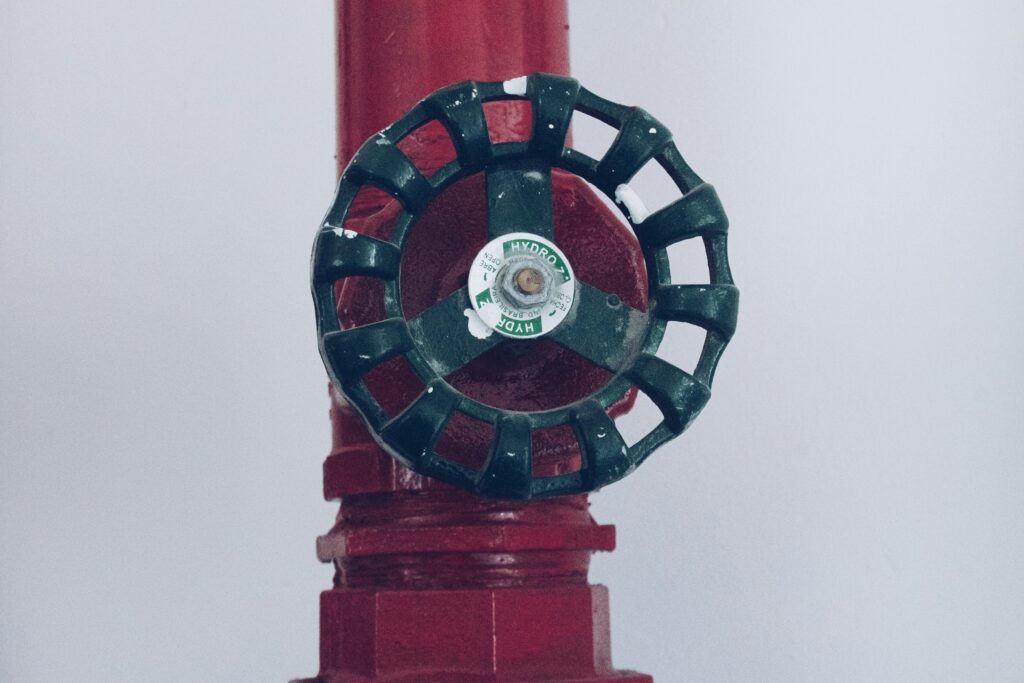
Fluctuating temperatures and shifting ground (due to frost heave) can affect the underground water mains and the seals on your building’s control valves. During our spring service visits, we ensure all valves are in the correct position and are easily operable. We also perform a flow test to verify that your water pressure still meets the original design specifications of the building. This is especially important for aging Chicago structures, where the municipal water supply or internal plumbing may have shifted over the winter months.
3. Checking the Condition of Sprinkler Heads
Spring is also the season for “spring cleaning” and minor renovations. Often, sprinkler heads are accidentally bumped or painted over during building touch-ups. We inspect individual heads for signs of “loading” (heavy dust buildup), corrosion, or mechanical damage. A single compromised head can delay response times during a fire, significantly increasing your liability and the potential for property loss.
Why Proactive Service is Your Best Insurance Policy
Many property managers operate on a “break-fix” mentality, waiting for a “trouble” light on their alarm panel before calling for help. Unfortunately, in the world of fire protection, waiting for an alarm often means the damage is already done. By scheduling a dedicated spring sprinkler system service Chicago and northwest Indiana, you are investing in prevention rather than an expensive, high-stress reaction.
A proactive inspection allows our technicians to identify minor issues—such as a slow-dripping valve or a corroded pipe hanger—before they become emergency repairs. This keeps your tenants happy by avoiding unexpected water shutdowns or loud, disruptive alarms during business hours. Furthermore, it provides you with the professional documentation needed to prove compliance to local fire marshals and insurance providers, who often conduct their own rounds in the spring.
Don’t let a winter hangover lead to a spring flood.
Central States Automatic Sprinklers, Inc. is ready to help you secure your facility for the season ahead.
Call us at: (708) 489-9400
Key Takeaways for Property Managers
- The “Thaw” Factor: Hairline cracks from winter ice often only begin to leak once the weather warms up significantly.
- Mechanical Integrity: Ensure all main and floor valves are fully open, secured, and haven’t “seized” due to cold-weather inactivity.
- Condensation Clearance: Dry systems must be cleared of any winter condensation to prevent the “internal rot” of pipe corrosion.
- Compliance Ready: Having a signed inspection report on file for spring fire marshal visits prevents fines and building violations.
- Auto-Pilot Safety: Regular maintenance from an experienced team like CSAS removes the “safety anxiety” from your daily to-do list.