
Key Takeaways
- Wet Pipe Systems are the most common but are prone to freezing in unheated Chicago spaces.
- Dry Pipe Systems use pressurized air to prevent frozen pipes in attics, garages, and warehouses.
- The Right Choice depends on your building’s insulation and heating capabilities.
- Retrofitting an older wet system to a dry system can save thousands in burst pipe repairs.
Living in Chicago or Northwest Indiana means dealing with brutal winters. While we worry about roads and heating bills, property managers often overlook a critical vulnerability: their fire sprinkler system.
If you are managing an older commercial building or a warehouse, you might be relying on a system that wasn’t designed for the Polar Vortex. Choosing the right system—or upgrading an old one—is the difference between a safe winter and a catastrophic flood.
Here is the breakdown of Wet vs. Dry pipe systems and what you need for your property.
The Wet Pipe System: Simple and Effective (Usually)
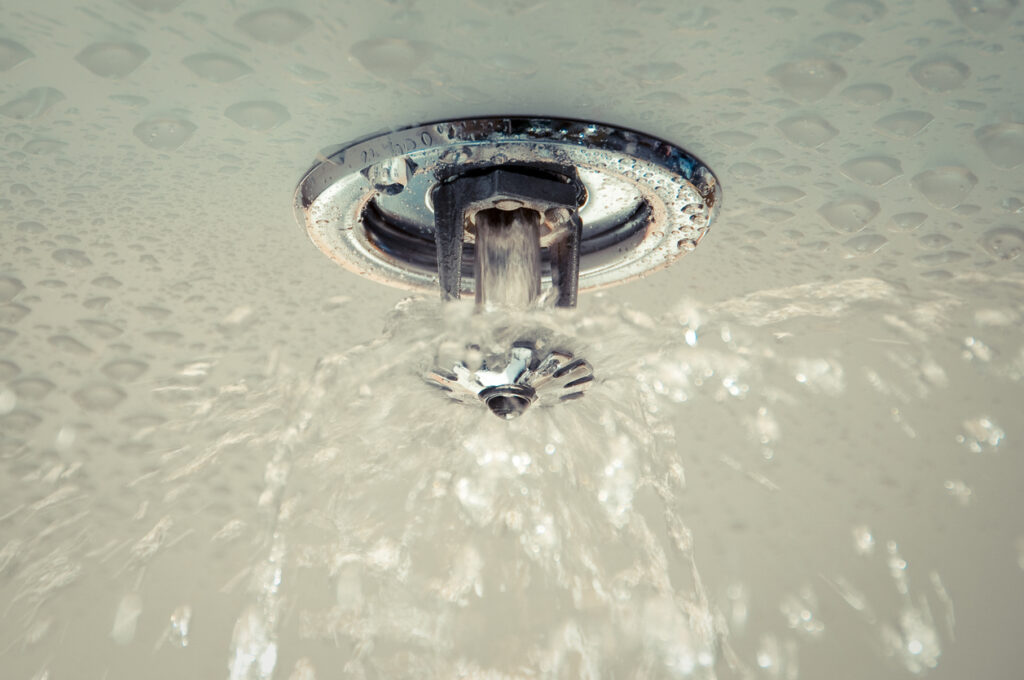
A wet pipe sprinkler system is the industry standard. In this setup, water is constantly stored in the pipes, right up to the sprinkler heads. When a fire triggers a head, water discharges immediately.
Pros:
- Reliability: Fewer moving parts mean less maintenance.
- Cost: Generally cheaper to install and maintain.
- Speed: Water is instant.
Cons for Chicago:
- Freezing Risk: Since water sits in the pipes 24/7, any drop in temperature below 40°F can cause the water to freeze, expand, and burst the pipe.
Best Use: Heated offices, retail spaces, and residential high-rises where the temperature never drops near freezing.
The Dry Pipe System: The Cold Weather Specialist
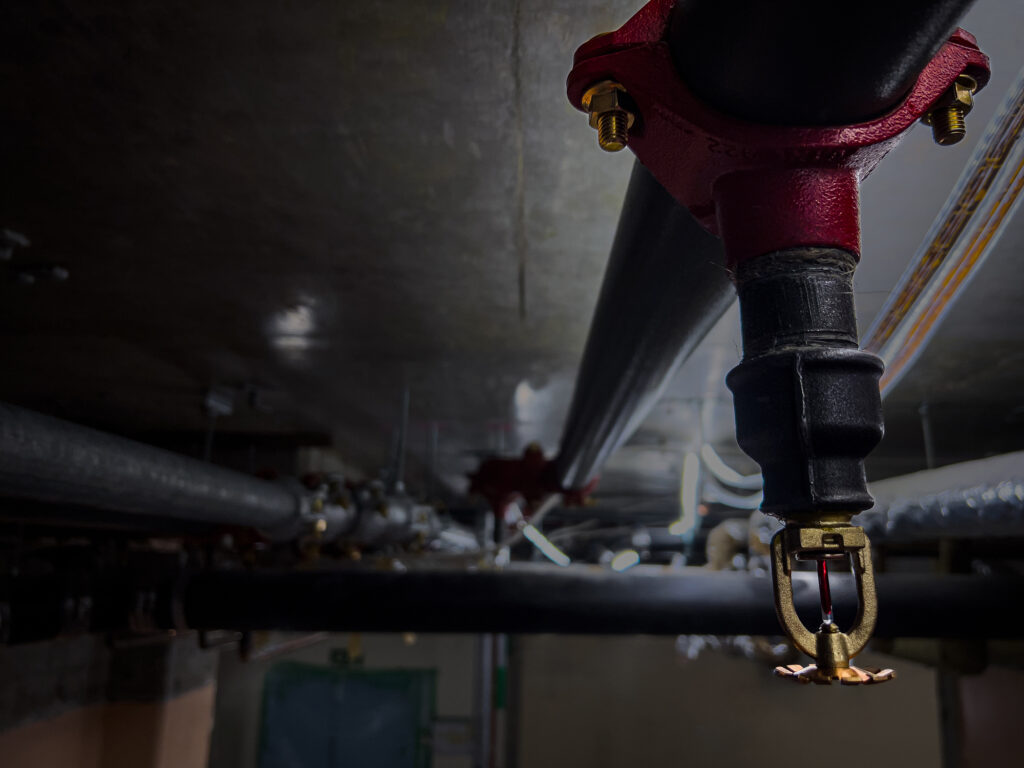
A dry pipe sprinkler system is engineered specifically for unheated spaces. Instead of water, the pipes are filled with pressurized air or nitrogen. A valve holds the water back in a heated riser room. When a sprinkler head activates, the air escapes, the valve opens, and water rushes in to extinguish the fire.
Pros:
- Freeze Protection: No water in the pipes means no ice in unheated attics, parking garages, or loading docks.
- Peace of Mind: You don’t have to panic every time the forecast hits zero.
Cons:
- Complexity: Requires more components (air compressors, dry valves) and slightly more maintenance.
- Response Time: There is a slight delay (seconds) while air escapes and water fills the system.
Best Use: Warehouses, parking garages, attics, loading docks, and outdoor overhangs.
The Verdict for Chicago Properties
If your building has unheated areas, relying on a wet system is a gamble. We have seen too many property owners face massive water damage because a wet pipe in a drafty attic froze during a cold snap.
If you have a wet system in a vulnerable area, you don’t have to rebuild the whole building. We specialize in Retrofitting existing systems. Our NICET-certified engineers can design a solution that converts vulnerable zones to dry pipes or anti-freeze loops without disrupting your daily operations.
When to Call CSAS
Don’t wait for a burst pipe to tell you your system is wrong for the climate. If you are unsure what type of system you have, or if you are worried about an unheated loading dock, our team is ready to help.
We provide expert Sprinkler system service Chicago business owners trust. As a family-owned business with 50 years of experience, we will give you an honest assessment and a “no-surprise” solution.
Call Central States Automatic Sprinklers today at (708) 489-9400 or contact us onlineto schedule your winter system evaluation.