
There is a familiar excitement that comes with a new commercial build-out. Whether you are welcoming a new tenant, refreshing an outdated office, or repurposing a warehouse, the focus is usually on the visible upgrades: new glass walls, modern lighting, open-concept ceilings, and fresh paint.
However, amidst the rush to get the Certificate of Occupancy, there is one critical element that often gets overlooked until the final inspection fails: the fire sprinkler system.
Just because a building has sprinklers doesn’t mean they will work for the new layout. At Central States Automatic Sprinklers, we frequently see renovation projects stalled because the fire protection plan wasn’t updated to match the new floor plan.
Here is why your new build-out might be violating fire codes, and how to fix it before you close up the ceilings.
1. The “Obstruction” Rule
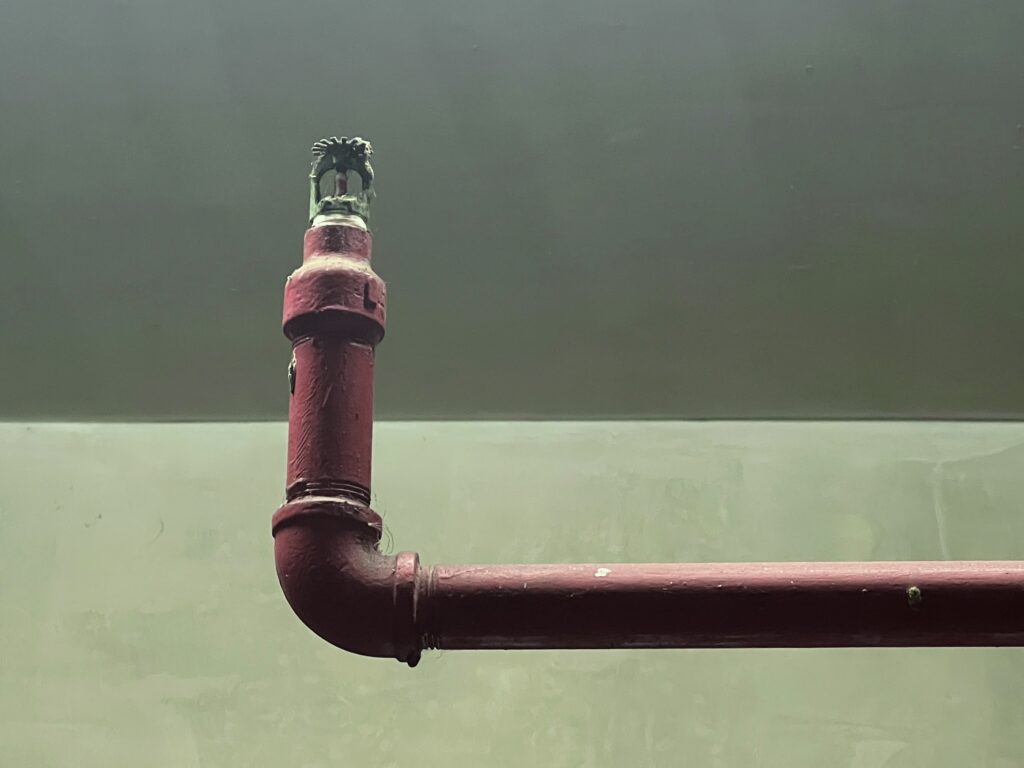
Fire sprinklers rely on a specific spray pattern to control a fire. This spray needs to reach the floor and wet the surrounding walls to prevent the flames from spreading.
- The Problem: When you build a new partition wall, install bulky HVAC ductwork, or hang large acoustic clouds (sound panels) from the ceiling, you might be blocking that spray pattern.
- The Rule: NFPA 13 (the standard for sprinkler installation) has strict rules about how far a sprinkler head must be from an obstruction. For example, if you build a wall within 18 inches of a sprinkler head, that head may need to be moved.
- The Solution: You cannot simply “work around” the existing heads. You need a Retrofitting Service to relocate heads to the center of new tiles or away from new obstructions.
2. Change of Hazard Classification
This is the most common—and dangerous—mistake we see in industrial and commercial real estate. You might assume that “a sprinkler is a sprinkler,” but the system was hydraulically calculated for a specific type of use.
Example Scenario: A space was previously used as a Data Processing Center. This is considered a “Light Hazard” environment. There isn’t much fuel for a fire. Now, a new tenant moves in: a Microbrewery or an E-commerce Distribution Center. They plan to stack cardboard boxes and plastic pallets 12 feet high.
The Risk: The existing “Light Hazard” system does not have the water pressure or volume (GPM) to suppress a fire in a “High Piled Storage” environment. If a fire starts, the sprinklers will activate, but they will be overwhelmed by the heat release rate of the burning plastic and cardboard. The Fix: You need a professional evaluation to determine if the system needs to be reinforced, which might involve upgrading pipe sizes or installing a larger fire pump.
3. The “Aesthetic” Upgrade
Modern office trends favor “open ceilings” (exposed pipes and ductwork). While this looks industrial-chic, it changes the rules for fire sprinklers.
- Heat Collection: Sprinklers activate by heat. In a standard drop ceiling, heat gathers quickly at the ceiling tile, triggering the head. In an open ceiling, heat dissipates differently. You may need to install heat collectors or change the type of sprinkler head used.
- Concealed Heads: For high-end lobbies or conference rooms where you don’t want to see the hardware, we can install concealed heads. These are hidden behind a flat cover plate that matches your ceiling color. When the temperature rises, the plate falls off, and the sprinkler drops down.
4. Code Compliance Updates
If you are doing a “Major Renovation” (often defined by the percentage of the building being altered), the City of Chicago or your local municipality may require you to bring the entire system up to current codes. Building codes change. A system installed in 1990 was compliant then, but it might lack backflow prevention or seismic bracing required today. A renovation is the trigger event that forces these upgrades. Ignoring this can lead to a failed final inspection, delaying your tenant’s move-in date, and costing you rent revenue.
The Design-Build Advantage
The biggest mistake general contractors make is treating fire protection as an afterthought. They frame the walls, run the HVAC, and then call the sprinkler guy. By then, the ceiling is crowded, and moving a pipe becomes a nightmare.
The smarter approach is utilizing a Design-Build strategy. By bringing CSAS Design Experts in during the architectural phase, we can:
- Overlay the sprinkler plan with the HVAC and electrical plans to spot collisions before they happen.
- Perform hydraulic calculations early to ensure the water supply matches the new tenant’s needs.
- Pre-fabricate piping to speed up installation on-site.
Don’t Let Compliance Delay Your Project
Your renovation should be a fresh start, not a compliance headache. Whether you are moving a single wall or gutting an entire warehouse, the fire sprinkler system must evolve with the building.
Before you sign off on that new floor plan, let’s ensure it’s safe and compliant.
Planning a renovation? Reach out to our engineering team early in the process. Visit our Contact Page or explore our Retrofitting Services to see how we can help your project stay on schedule and up to code.