

Spotting the need for commercial fire sprinkler system retrofits early can save you from serious life-safety failures, costly regulatory fines, and disruptive downtime. In this context, a retrofit means making targeted upgrades or modifications to your piping, valves, controllers, fire pumps, or inerting systems to bring them back to compliant performance and reliable operation. This article will walk you through five key warning signs—corrosion, low water pressure/flow issues, outdated systems and non-compliance, frequent false alarms and leaks, and physical damage—that signal it’s time to start planning for a retrofit. You’ll learn how to identify both visible and hidden symptoms, how to decide between simple repairs and a full retrofit, and what inspection evidence authorities and insurers will expect. The following sections provide diagnostic checks, decision points, retrofit options (including nitrogen inerting and commercial fire pump upgrades), and practical next steps for facility managers across the Chicagoland and Northwest Indiana region.
What Are the Most Common Signs of Corrosion in Commercial Fire Sprinkler Systems?
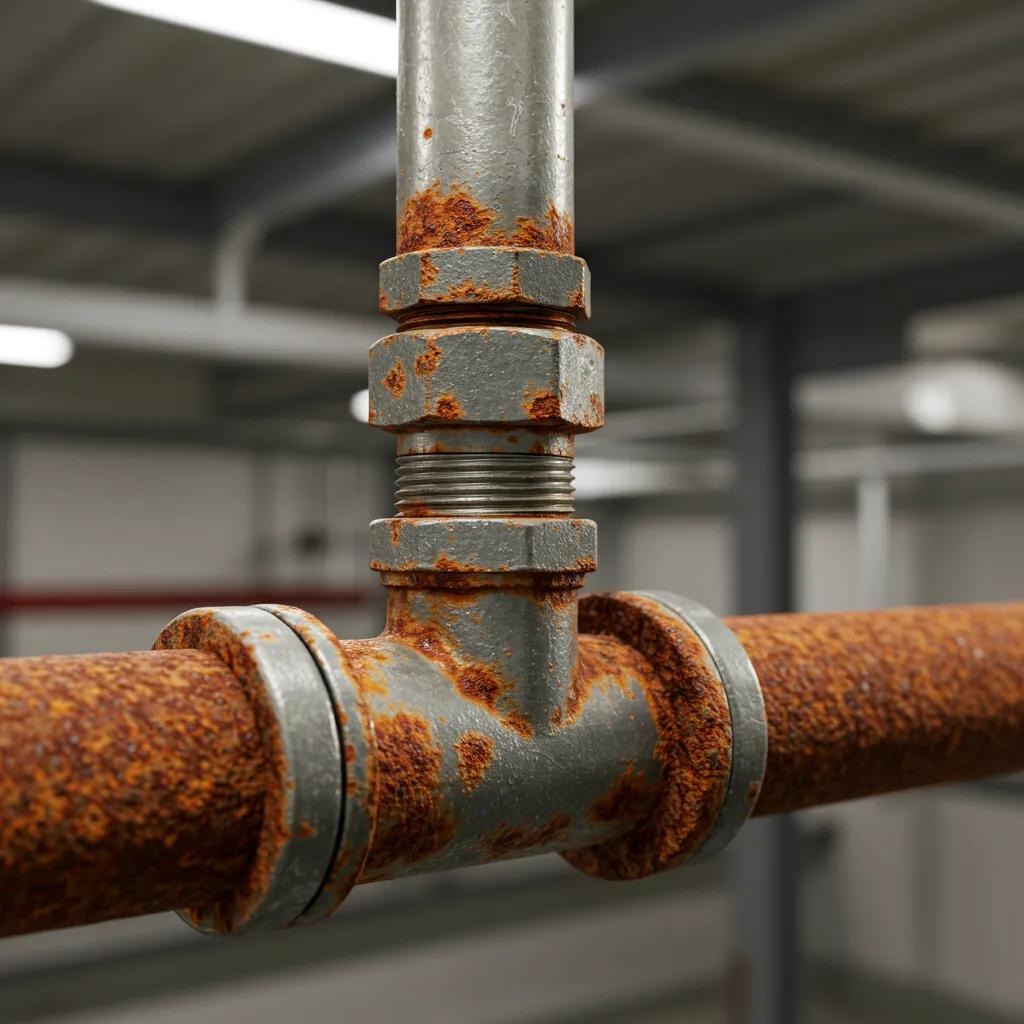
Corrosion in a commercial fire sprinkler system is the electrochemical or microbiological breakdown of metal components. This degradation reduces pipe wall thickness, clogs vital orifices, and weakens joints, ultimately compromising water flow and overall system reliability. Corrosion happens when oxygen, moisture, and certain bacteria interact with steel and iron piping. The way it manifests differs by system type: dry pipe interiors can trap moisture, while wet systems often show external rust and joint pitting. Catching corrosion early helps you avoid catastrophic failures by allowing for targeted retrofits like section replacement, internal lining, or a nitrogen inerting retrofit to limit oxygen exposure. Understanding where corrosion appears and how it impacts your system’s function is crucial for guiding inspection priorities and planning the scope of your retrofit, especially when deciding between replacement and repair.
How Does Corrosion Affect Dry Pipe and Wet Pipe Sprinkler Systems?
Dry pipe systems are designed to hold pressurized air or nitrogen, staying dry until activation. However, trapped moisture and condensation can lead to microbiologically influenced corrosion (MIC) and internal pitting, which narrows pipe bores and clogs orifices. Wet pipe systems, on the other hand, frequently show external corrosion and joint deterioration due to atmospheric exposure, resulting in leaking fittings, weakened welds, and accelerated failure at threaded connections. Both system types can experience reduced hydraulic capacity—meaning the piping directly impacts the relationship between pressure and flow—so corrosion shortens service life and increases the burden of inspections and maintenance. Recognizing the specific corrosion patterns for each system type helps determine if a dry pipe corrosion retrofit, such as nitrogen inerting or selective replacement, is the most effective solution.
What Are the Visible and Hidden Signs of Sprinkler System Corrosion?
Visible signs of corrosion are clear indicators that metal is degrading and should prompt further evaluation. These include rust staining on piping and ceilings, pitting around fittings, scale on sprinkler heads, and weeping joints. Hidden signs often appear as pressure anomalies, unexplained flow restrictions, or recurring flow alarms without an obvious activation event, suggesting internal bore reduction or blockages from corrosion byproducts. Facility managers should utilize diagnostic tools like ultrasonic thickness testing, borescope inspection, and trending of pressure transducer data to detect concealed deterioration before it leads to leaks or failures. Early detection of hidden damage directly informs decisions about nitrogen inerting or targeted replacement, which are crucial next steps in mitigating further deterioration.
At Central States Automatic Sprinklers (CSAS), we bring certified inspectors and an in-house parts inventory to your retrofit diagnostics. We offer targeted inspections and retrofit planning that meticulously document corrosion findings for authorities having jurisdiction (AHJs) and insurers. CSAS provides 24/7 emergency availability throughout Chicagoland and Northwest Indiana to evaluate corrosion-related alarms and recommend nitrogen inerting retrofits or selective piping replacement when appropriate. For facility managers seeking a clear, documented path from inspection to corrective action, we align on-site findings with effective retrofit solutions and compliance steps. The next section will explain how pressure and flow anomalies signal the urgency for a retrofit.
Corrosion in Fire Sprinkler Systems: Pitting of Copper Tubes
Pitting corrosion of copper tubes for a fire sprinkler system were conducted to understand the cause of pitting corrosion. The results showed that the water in the leaked tubes was more corrosive than that in the non-leaked tubes. Surface analysis revealed that the corrosion products in the leaked tubes were different from those in the non-leaked tubes, indicating that the corrosion mechanism was different.
How Do Low Water Pressure and Flow Issues Signal the Need for a Retrofit?
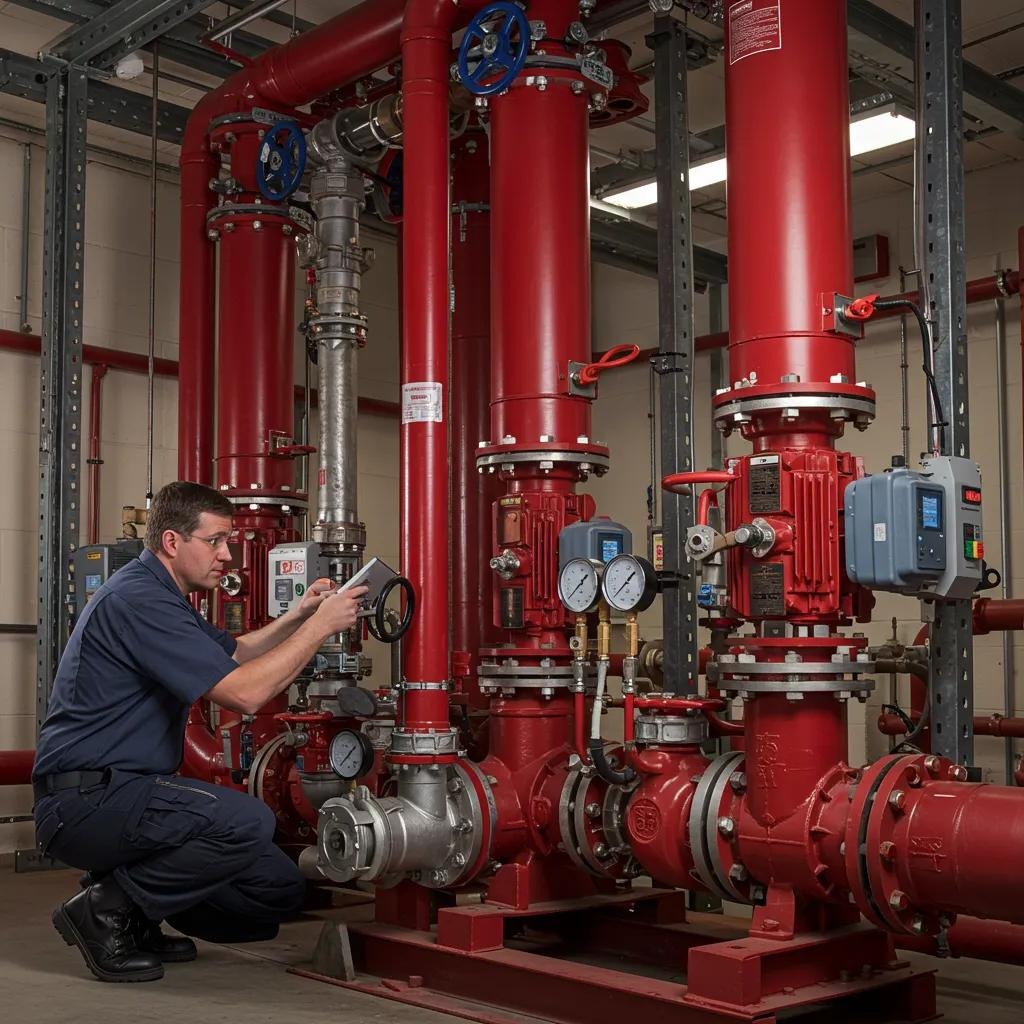
Low water pressure and inadequate flow are clear indicators that your system can’t deliver the necessary suppression performance. These issues often stem from supply-side restrictions, internal obstructions, failing fire pumps, or misadjusted valves that reduce the hydraulic capacity delivered. Diagnostically, a sustained shortfall below your system’s design pressure/flow targets—documented by flow switch events, pressure transducers, or routine pump testing—suggests that simple repairs might not be enough. In such cases, a commercial fire pump upgrade or supply enhancement should be seriously considered. Early measurement and trend analysis help translate observed symptoms into clear decision thresholds: transient drops might warrant cleaning and valve checks, but persistent deficits point to the need for pump or supply upgrades. Accurately correlating measured deficits with their root causes prevents wasted repairs and clearly defines the retrofit scope required to restore full compliance.
What Causes Low Water Pressure in Commercial Fire Sprinkler Systems?
Common culprits behind low pressure include sediment and corrosion buildup inside piping, which reduces the effective diameter, partially closed or deteriorated valves that restrict flow, municipal supply reductions or hydrant pressure issues, and failing or undersized fire pumps that can no longer meet demand. Simple checks you, as a facility manager, can perform include verifying valve positions, inspecting visible pipe sections for scale, checking pump controller alarms, and confirming municipal pressure during a test. If these initial checks don’t restore design pressures, an engineering-level hydraulic test should follow to pinpoint restrictions and quantify your retrofit needs. Understanding the specific cause guides you toward the most effective solution, whether it’s a repair, localized pipe replacement, or a broader commercial fire pump upgrade.
When Should Fire Pump and Water Supply Upgrades Be Considered?
Fire pump and supply upgrades become essential when you experience repeated pump failures, a recurring inability to meet code-required flow targets during acceptance testing, or confirmed supply pressure reductions that persist even after basic maintenance and valve checks. Key decision criteria include documented failure-to-meet-flow on multiple tests, the age or obsolescence of pump controllers, and any changes in building occupancy or hazard classification that increase demand. Consulting with the authority having jurisdiction and coordinating with municipal water suppliers is vital to ensure that any retrofit will truly restore code-compliant performance, rather than just masking a supply-side limitation. When upgrades are necessary, your planning should include hydraulic calculations, coordination with local agencies, and a thorough cost-benefit analysis compared to phased replacement.
The introductory diagnostic comparisons below offer a quick summary of typical supply causes, observable indicators, and recommended retrofit actions, designed for rapid triage by your facility teams.
| Water Supply Source | Common Indicator | Recommended Retrofit Action |
| Municipal supply | Sustained low residual pressure on hydrant tests | Coordinate with water utility; consider supply enhancement or booster pump |
| On-site tanks/reservoirs | Low usable volume or sediment-related flow issues | Clean/replace tanks; install filtration and monitoring |
| Fire pump system | Repeated pump trips, failure to hit rated flow curve | Service pump and controller; consider fire pump upgrade commercial retrofit |
This table is designed to help facility managers match observed symptoms to practical retrofit actions and prioritize emergency responses. The next section will show how flow alarms and obstructions often signal deeper system problems.
Fire Pump Retrofits: Understanding Installation Needs and Upgrades
Retrofit fire pump installations typically become necessary when there is an increased demand on the fire protection system. A frequent reason for this is the need to upgrade or replace an existing fire pump to meet current code requirements or to support an increased demand on the fire protection system. A frequent reason for this is the need to upgrade or replace an existing fire pump to meet current code requirements or to support an increased demand on the fire protection system. A frequent reason for this is the need to upgrade or replace an existing fire pump to meet current code requirements or to support an increased demand on the fire protection system.
How Do Flow Alarms and System Obstructions Indicate Retrofit Needs?
Recurring flow alarms often point to internal blockages like scale or loose debris that intermittently restrict flow, or to deteriorating piping that sheds material into the system and triggers flow sensors. System obstructions can be localized at branch lines, at reduced-diameter fittings, or within dry pipe components. Each of these creates measurable pressure differentials that a consistent trending program will reveal. Interpreting alarm logs alongside physical inspections allows decision-makers to determine whether cleaning, section replacement, or a broader retrofit (such as replacing corroded mains) is necessary to prevent future alarms. Once obstruction sources are identified, documented corrective actions provide crucial support for retrofit planning and compliance documentation.
For facilities in Chicagoland and Northwest Indiana, Central States Automatic Sprinklers (CSAS) offers comprehensive assessment services. We combine pump testing, flow alarm analysis, and obstruction localization with in-house parts replacement and expert retrofit planning. Our certified inspectors can recommend a range of actions, from targeted cleaning and valve service to full commercial fire pump upgrades, helping you translate test data into a prioritized work plan. With our 24/7 emergency support, critical flow failures receive immediate attention while we develop a longer-term retrofit strategy. Next, we’ll examine the criteria for identifying outdated systems that warrant a smart retrofit investment.
How Can You Identify Outdated Fire Sprinkler Systems That Require Retrofits?
An outdated fire sprinkler system is one where key components, original design assumptions, or overall performance no longer meet current NFPA standards, local codes, or insurer requirements. This includes obsolete valves, discontinued sprinkler heads, legacy controllers, and piping that has simply exceeded its practical service life. Key indicators include the inability to source replacement parts, frequent corrective actions, a lack of compatibility with modern monitoring systems, and clear deviations from NFPA 25 inspection and testing outcomes. Deciding whether to retrofit or replace requires carefully mapping your system’s type, age, and condition against known code changes and your operational needs, all while balancing the total cost of ownership against safety and compliance risks. A structured compliance review that thoroughly documents deficiencies will inform whether a phased retrofit or a complete system modernization is the most appropriate corrective path.
What Are the Risks of Non-Compliance with NFPA 25 and Local Fire Codes?
The risks of non-compliance are significant and include fines or enforcement orders from authorities having jurisdiction, potential denial of insurance claims after a loss, increased liability exposure, and most critically, a higher probability of system failure during an actual incident. NFPA 25 mandates routine inspection, testing, maintenance, and timely corrective action. Failing to meet these obligations creates evidentiary gaps that insurers and AHJs can use against property owners. Addressing non-compliance typically begins with a documented inspection that clearly maps each deficiency to specific corrective actions and timelines. This mapping then forms the foundation of a retrofit plan that both restores safety margins and demonstrates that the owner has acted responsibly.
How Do System Lifespan and Technology Upgrades Influence Retrofit Decisions?
System lifespan and technology considerations heavily influence whether a retrofit is more cost-effective than a full replacement. Older systems with limited parts availability or outdated controllers might justify a complete replacement, while systems with localized degradation can often benefit significantly from targeted retrofits. These might include upgrading control valves, replacing obsolete sprinkler heads, or adding modern monitoring hardware. Technology upgrades—such as advanced controllers and flow/transducer telemetry—improve reliability and simplify ongoing NFPA 25 compliance by enhancing diagnostics and documentation. Your decision-making process should weigh the immediate capital cost against long-term maintenance savings, improved monitoring capabilities, and reduced insurance exposure. These lifecycle considerations are essential for framing your retrofit planning and supporting ROI calculations for all stakeholders.
| System Type | Attribute | Typical Age / Condition | Recommended Action |
| Dry pipe systems | Internal moisture risk and older fittings | 30+ years with documented MIC risk | Consider nitrogen inerting retrofit or partial pipe replacement |
| Wet pipe systems | External corrosion at joints | 25+ years with visible rust | Prioritize joint replacement and corrosion mitigation |
| Pre-action systems | Obsolete detection & controllers | Parts discontinued or failing | Upgrade detection and controller, selective piping retrofit |
This easy-to-understand mapping helps you prioritize urgency and select the most effective remediation pathways based on observable condition and age. The next section will address how false alarms and leaks often reveal deeper system health issues.
Central States Automatic Sprinklers (CSAS) performs thorough compliance reviews and develops retrofit plans that precisely align with NFPA 25 requirements and local codes. Our certified inspectors meticulously document non-compliant conditions, propose prioritized remediation strategies, and coordinate seamlessly with AHJs and insurers to streamline approval workflows. Our comprehensive service offerings include inspection, retrofitting, design and build, and emergency maintenance, effectively bridging the gap between inspection findings and executed retrofit scopes. The following section will explain the diagnostic signals from false alarms and leaks in detail.
Challenges and Benefits of Retrofit Sprinkler Systems in Old Buildings
It was observed that the retrofit sprinkler systems might not perform satisfactorily in case of fire if not properly designed and installed. This is because the existing building structure and layout may not be suitable for the installation of a sprinkler system, and the system may not be able to provide adequate coverage or water supply. However, it was also observed that fire safety measures would be improved with the retrofit installation of sprinkler systems, provided that they are properly designed and installed.
What Do Frequent False Alarms and Leaks Reveal About Sprinkler System Health?
Frequent false alarms and minor leaks are often symptoms of underlying mechanical, electrical, or material degradation. If left unaddressed, these issues can quickly escalate into full system failure or unintended water release. False alarms commonly stem from failing flow sensors, unstable pressure due to pump cycling, or corrosion shedding particles that trigger detectors. Leaks, on the other hand, frequently originate at deteriorated joints, pinholes, or failing valve packs. When these events recur, they signal a systemic weakness rather than isolated faults and should prompt a comprehensive retrofitting assessment that looks beyond immediate, temporary repairs. Systematic inspection and careful trending of alarm logs empower facility teams to spot patterns and prioritize corrective actions that will restore reliable operation.
How Do False Alarms Indicate System Malfunctions or Corrosion?
False alarms frequently point to mechanical or hydraulic instability within your system. Particulate matter from corrosion can intermittently activate flow switches, while sensor drift and improper calibration can create spurious alerts that mask real events. Differentiating between detector or sensor faults and hydraulic causes requires coordinated testing—bench-checking sensors, simulating flow events, and thoroughly inspecting upstream piping for loose scale. When false alarms correlate with evidence of corrosion or pressure variability, the underlying cause is often material degradation that warrants retrofit measures, rather than simply replacing sensors repeatedly. Detecting this connection early supports targeted interventions that reduce nuisance events and significantly improve system uptime.
What Types of Leaks and Valve Malfunctions Require Immediate Retrofit Action?
Emergency-level leaks—such as active discharges, uncontrolled weeping at couplings, or burst sections—demand immediate shutdown and emergency repair. These situations directly compromise life-safety performance and property protection. Recurrent valve malfunctions, including failing supervisory valves or pressure relief faults, signal systemic risk and often indicate internal degradation of valve components or piping that requires a retrofit-level replacement. Pinhole leaks and repeated joint weeping should prompt prioritized replacement of affected runs and a thorough evaluation of adjacent piping to prevent recurrence. Classifying the urgency of a leak helps determine whether quick repairs will suffice or if a larger, more comprehensive retrofit is truly necessary.
How Can Regular Inspection Detect These Warning Signs Early?
Regular inspection, guided by NFPA 25 standards—which includes documenting visual checks, functional tests, and trend analysis of pressure/flow data—is crucial for catching early indicators. These might be slight weeping, rust staining, or intermittent alarm patterns, all before they escalate into emergencies. Inspectors should use consistent checklists, meticulously photograph and record anomalies, and sample pipe interiors when corrosion is suspected. This builds the essential evidence needed to justify a retrofit. Maintaining detailed inspection records and tracking follow-up corrective actions creates an auditable trail for AHJs and insurers, and it provides valuable data for informing retrofit prioritization. Effective inspection routines ultimately reduce the scope and cost of future retrofits by enabling earlier, less invasive interventions.
How Does Physical Damage and Wear-and-Tear Signal the Need for a Fire Sprinkler Retrofit?
Physical damage and cumulative wear degrade specific system components—including sprinkler heads, piping, valves, and controllers—affecting both operability and code compliance. Such damage is a clear trigger for a retrofit when it impacts system performance or leads to recurring failures. Common physical mechanisms include impacts during construction, interference from HVAC systems, freeze-thaw cycles, mechanical abrasion, and unauthorized alterations that change hydraulic profiles. Prioritizing replacements during a retrofit requires a strategic triage framework: focusing first on life-safety-critical items, then on reliability upgrades, and finally on preventative enhancements. Recognizing the pattern and extent of physical damage helps owners plan retrofit phasing that minimizes downtime and ensures continuous protection.
What Are Common Causes of Physical Damage in Commercial Sprinkler Systems?
Common causes of physical damage include accidental strikes during tenant build-outs or routine maintenance, vibration and abrasion from nearby mechanical systems, freeze damage in uninsulated branches, and corrosion-accelerated failure that manifests as physical leaks or cracks. This damage often concentrates in exposed runs, branch lines near mechanical rooms, and areas undergoing frequent structural work. Identifying the dominant cause helps you select the right remediation—whether it’s protective shielding, rerouting, insulation, or selective replacement—to prevent recurrence. Understanding the cause directly informs decisions about which components to prioritize in the next retrofit phase.
How Should Component Replacement Be Prioritized During Retrofits?
Replacement prioritization should follow a strategic triage approach. First, address **life-safety-critical items** such as main risers, control valves, and compromised sprinkler heads. Next, focus on **components that significantly affect system reliability**, like aged pump controllers and flow switches. Finally, consider **preventative upgrades** such as insulation, protective guards, or improved hangers. This staged approach minimizes operational disruption while restoring required performance metrics and ensuring compliance. When parts are obsolete or repeatedly failing, it’s more effective to include their replacement in the retrofit scope rather than attempting repeated repairs. Prioritization also considers parts availability and potential downstream schedule impacts to maintain system resilience.
When Is It Time to Schedule a Professional Assessment for Physical Damage?
You should schedule a professional assessment whenever there is visible structural damage, repeated or escalating leaks, a significant deviation from expected hydraulic performance, or after any construction and mechanical work that may have impacted your sprinkler runs. Immediate assessment is also warranted following any event that compromises system integrity—such as freeze events, impact strikes, or multiple simultaneous component failures. A professional assessment will thoroughly document the damage, recommend precisely scoped repairs or retrofits, and produce the necessary evidence for AHJ and insurer review. Timely professional evaluation shortens the path from detection to retrofit action and significantly reduces the chance of emergency outages.
Why Is NFPA 25 Compliance Critical for Commercial Fire Sprinkler System Retrofits?
NFPA 25 is the widely accepted consensus standard that governs the inspection, testing, and maintenance of water-based fire protection systems. Compliance is absolutely critical because it defines the minimum actions owners must take to maintain system readiness and prescribes the required corrective actions that often become triggers for retrofits. The standard outlines specific inspection intervals, testing protocols (including pump tests and valve inspections), and mandatory documentation. When inspections identify conditions outside acceptable limits, NFPA 25 expects corrective action commensurate with the risk, which commonly takes the form of retrofits or component replacements. Aligning your retrofit work with NFPA 25 ensures regulatory acceptability, supports clear communication with insurers, and restores vital safety margins. Understanding these key obligations streamlines your retrofit planning and acceptance process.
What Are the Key NFPA 25 Requirements Affecting Existing Sprinkler Systems?
Key NFPA 25 requirements include scheduled visual inspections, periodic functional tests (such as weekly supervisory tests and annual fire pump performance tests), thorough corrosion evaluation, regular valve exercising, and prompt corrective action whenever tests identify deficiencies. Documentation of all inspections, test results, and corrective measures is mandatory and serves as crucial evidence during AHJ reviews and insurance underwriting. When inspections reveal unacceptable conditions—such as reduced pipe thickness, nonfunctioning supervisory devices, or an inability to meet pump curves—NFPA 25 guidance typically directs owners to implement corrective action, which often evolves into a retrofit project. Mapping your findings to specific NFPA 25 clauses clarifies priority and timelines for remediation.
How Do Retrofits Ensure Ongoing Compliance and Safety?
Retrofits directly address non-compliant conditions by replacing or upgrading components to meet current performance criteria. This means restoring required pressure/flow, ensuring valves are accessible and fully functional, and bringing detection and control elements up to modern expectations. They also generate comprehensive documentation packages—including as-built adjustments, test reports, and corrective-action records—that clearly demonstrate to AHJs and insurers that all required actions were taken. By restoring design margins and improving monitoring capabilities, retrofits reduce the likelihood of future non-compliance and simplify your ongoing ITM (inspection, testing, and maintenance) obligations. Properly scoped retrofits effectively convert inspection findings into durable compliance and documented safety improvements.
How Often Should Commercial Fire Sprinkler Systems Be Inspected for Compliance?
NFPA 25 establishes a baseline of inspection and testing intervals, ranging from weekly and monthly visual checks to annual pump and full-flow tests. It also strongly recommends accelerated inspection after events such as construction, seismic activity, or known damage. As an owner, you should strictly follow the standard’s frequency schedule and increase inspection cadence when early-warning signs (like corrosion, recurrent alarms, or leaks) are present to catch deterioration even earlier. Documenting each inspection and corrective step creates the required audit trail for AHJs and insurers, and it supports data-driven retrofit scheduling. Consistent inspection frequency ultimately reduces retrofit costs by catching issues before they demand wholesale replacement.
What Are the Benefits of Timely Commercial Fire Sprinkler System Retrofits?
Timely retrofits deliver measurable improvements in life-safety performance, system reliability, and financial outcomes. They achieve this by reducing the incidence of false activations, preventing catastrophic leaks, extending component life, and potentially lowering your insurance exposure. A retrofit that precisely targets the primary failure modes—whether it’s corrosion, pump obsolescence, or outdated controllers—restores design margins, ensuring your system reliably delivers the required flows exactly when needed. Quantified benefits include fewer nuisance alarms, a reduction in emergency maintenance events, and extended time before major assets require full replacement. Owners who meticulously document retrofit scopes and testing can present clear evidence to insurers and AHJs, demonstrating restored performance, which supports favorable premium negotiations and compliance acceptance.
How Do Retrofits Improve Safety and Reduce System Failures?
Retrofits actively remove known failure mechanisms. This means replacing corroded piping, upgrading pumps that no longer reach their rated curves, installing inerting systems to prevent MIC, and modernizing controllers to improve diagnostics. By doing so, they restore the engineered relationship between pressure and flow. By addressing root causes, retrofits significantly lower the frequency of false alarms and unplanned water damage events, leading to more predictable, reliable protection. Improved monitoring and comprehensive documentation after a retrofit enable earlier detection of future issues and reduce emergency response times. Overall, these safety-oriented outcomes translate into fewer incidents and provide clearer evidence to stakeholders that your facility consistently meets minimum safety expectations.
In What Ways Do Retrofits Extend System Lifespan and Efficiency?
Specific retrofit measures—such as a nitrogen inerting retrofit for dry systems, selective replacement of corroded mains, and upgraded pump controllers—significantly extend service life by halting active degradation and reducing mechanical stress on components. After a retrofit, you’ll often find that expected maintenance intervals lengthen and component replacement cycles shift, ultimately lowering lifecycle costs and unplanned downtime. Upgrades also enhance hydraulic efficiency by restoring pipe bore and reducing pressure losses, which can decrease pump wear and energy expenditure during periodic testing. These extended lifespans and efficiency gains provide tangible ROI that facility managers can clearly quantify when planning capital expenditures.
| Retrofit Target | Benefit Type | Quantified Value / Example |
| Nitrogen inerting retrofit | Lifespan extension | Reduces internal corrosion rate; can extend dry system life by multiple years in effected zones |
| Fire pump upgrade commercial | Reliability | Restores design flow; eliminates repeated trip events and associated downtime |
| Valve and controller modernization | Operational efficiency | Improves diagnostics and reduces false alarms, lowering emergency service calls annually |
This EAV-style comparison clearly highlights how specific retrofit actions translate into measurable operational and financial benefits for your facility.
For building owners seeking a reliable retrofit partner, Central States Automatic Sprinklers (CSAS) offers inspection-driven retrofit services, comprehensive service agreements, and immediate parts replacement from our in-house inventory to speed remediation. CSAS is a family-owned business, offers 24/7 emergency services throughout Chicagoland and Northwest Indiana (including Blue Island, IL), and employs certified inspectors who ensure retrofit scopes align perfectly with NFPA 25 requirements and local code expectations. Choosing an experienced local partner like us helps ensure your retrofit work is thoroughly documented, defensible to insurers and AHJs, and executed with minimal disruption to your operations. The lists below summarize practical retrofit benefits and key decision triggers to guide your next steps.
Acting early on retrofit indicators brings clear benefits: enhanced compliance, fewer unplanned disruptions, and a stronger position with your insurer.
- Improved Reliability: Retrofits restore hydraulic capacity and significantly reduce false activations.
- Extended Asset Life: Targeted measures slow degradation, effectively delaying the need for full system replacement.
- Insurance & Compliance Value: Documented retrofits strengthen your position in insurer negotiations and ensure AHJ acceptance.
Conclusion
Recognizing the warning signs that indicate a need for retrofits in your commercial fire sprinkler system is absolutely crucial for maintaining both safety and compliance. By proactively addressing issues such as corrosion, low water pressure, and outdated components, you can significantly enhance your system’s reliability and reduce the risk of costly failures. Engaging with a qualified service provider like Central States Automatic Sprinklers ensures that your retrofit needs are met with unparalleled expertise and precision. Take the proactive step today to safeguard your facility by scheduling a comprehensive inspection and retrofit assessment with our trusted team.